
 3 months ago
34
3 months ago
34

birminghamal.gov
As spring blooms across Birmingham, so does an ambitious vision: a city where trails reconnect communities once divided, honor profound history, and open pathways to health, opportunity, and belonging.
The Birmingham Civil Rights Crossroads project is a key piece of this vision. More than a trail, it is a transformational investment in Birmingham’s historic Civil Rights District and surrounding neighborhoods, bringing together safer streets, improved transit access, green infrastructure, public spaces, and multimodal connections that better connect people to jobs, destinations, and opportunity.
A key component of the project — the east-west shared-use path connection — is identified as Corridor A in the Red Rock Trail System Action Plan, one of seven priority projects that will ultimately help create a 36-mile regional loop.
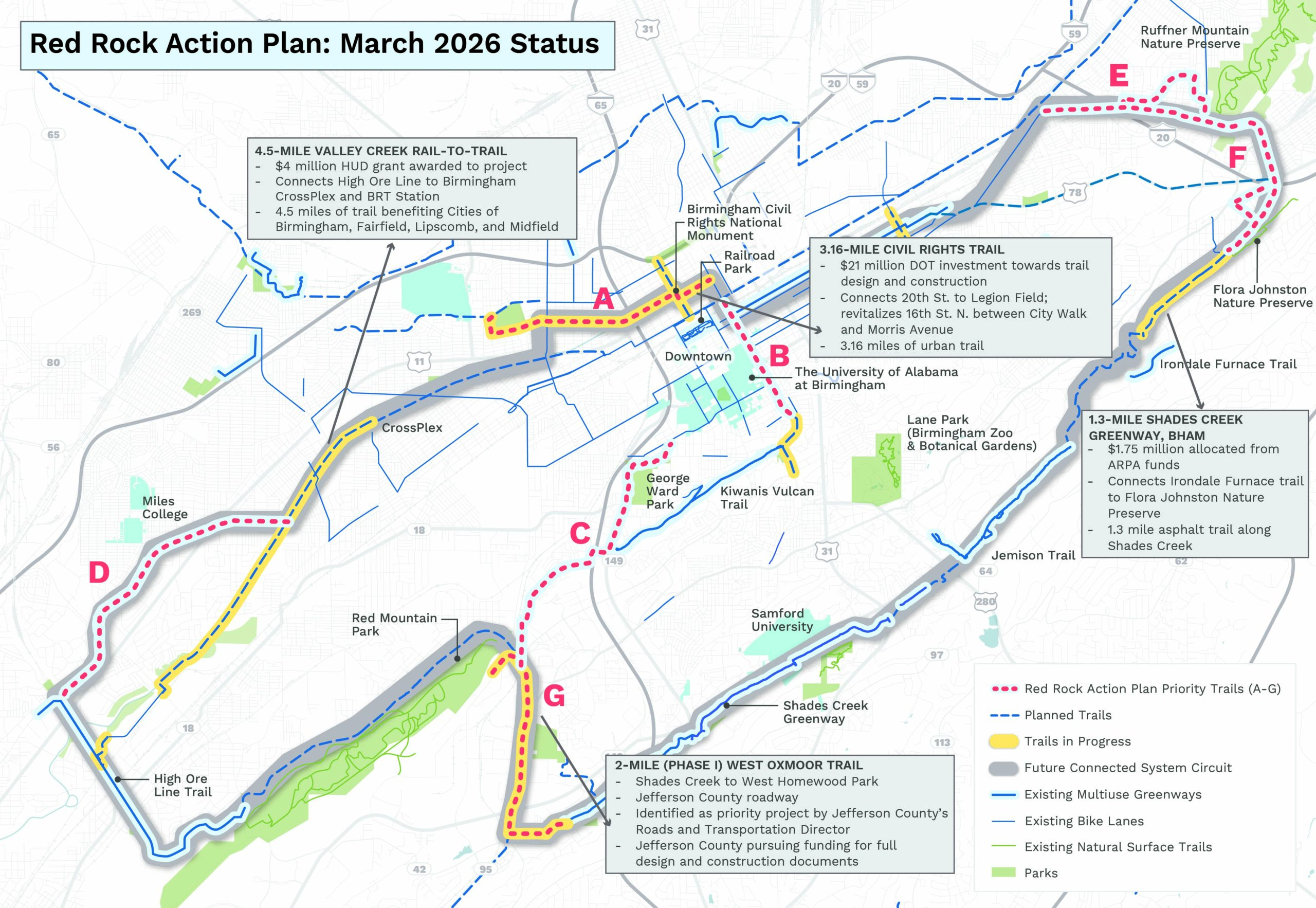
Red Rock Action Plan: March 2026 Status
The Red Rock Trail System is a network of trails, parks, and complete street infrastructure spanning Jefferson County. As of 2026, 175 miles of trails have been completed. The system is made up of six major corridors: Jones Valley (including Valley Creek), Village Creek, Five Mile Creek, Shades Creek, Cahaba River, and Turkey Creek. Each of these follow Birmingham’s waterways to create connections across the county.
The vision? A fully integrated trail system where every trail within each corridor is connected, giving Jefferson County residents complete access to both routine transportation and recreation. The Red Rock Action Plan, released in 2023, outlines the next phase: 19 miles of new trails that will complete a 36-mile loop around the Greater Birmingham area.
Where Crossroads Fits In
The Crossroads project is part of Corridor A in this ambitious plan. It connects Smithfield — historically cut off by I-65 — to downtown Birmingham, passing through the historic Black Merchant District on 4th Avenue and connecting downtown to Legion Field. The corridor passes through some of the most significant sites in American Civil Rights history: Kelly Ingram Park, where marchers faced fire hoses and police dogs in 1963; 16th Street Baptist Church, site of the tragic bombing that killed four young girls and galvanized the nation; and the A.G. Gaston Motel, where Dr. Martin Luther King Jr. and the Southern Christian Leadership Conference strategized the Birmingham Campaign.
When complete, it will be a crucial link in the larger loop that aims to join other priority corridors like the 20th Street connection to Kiwanis Vulcan Trail, the Red Mountain Park to UAB route, and the Ruffner Mountain Rail Trail.
But Crossroads is more than just infrastructure. It’s located along one of the most historic corridors in United States history, making it a powerful tool to tell Birmingham’s Civil Rights story to local, national, and international audiences — while also creating opportunities for new investment, supporting local businesses, and strengthening Birmingham’s position as a destination for residents and visitors alike.
Through partnership with Freshwater Land Trust, the City of Birmingham, REV Birmingham, Urban Impact, and support from Alabama Power and federal RAISE grant funding, this vision is becoming reality. The project vision has also been informed by extensive community engagement, with hundreds of residents, business owners, faith leaders, and stakeholders helping shape priorities and design concepts.
Why This Project Matters
Consider this: Smithfield is a seven-minute bike ride to downtown Birmingham; yet right now, there’s no easy or safe way to make that connection. This project changes that, providing broader access to healthcare, employment opportunities, and social services for people living in west Birmingham.
The Crossroads Trail addresses several community priorities at once. It improves safety for people walking, biking, and using transit. It creates stronger connections between neighborhoods and downtown destinations. It expands access to parks and public spaces. And it helps tell Birmingham’s story in a way that invites both residents and visitors to experience the places that shaped the Civil Rights Movement. The project also advances a long-term vision that every Jefferson County resident has a greenspace within one mile of their home. Crossroads will connect to established, beloved downtown parks like City Walk Birmingham and Railroad Park, opening new opportunities for recreation and community connection.
“We have seen time and again that the power of greenspace is unmatched by any other civic project,” says Carolyn Buck of Freshwater Land Trust. “Crossroads is knitting our communities back together in a unique way.”
Trails and complete streets are true community connectors — not only physically linking neighborhoods, but creating spaces where people can get outside and interact in ways that aren’t possible inside a car. Whether to exercise, experience nature, recreate with friends, or play with children, these spaces create the connections that allow community to happen.
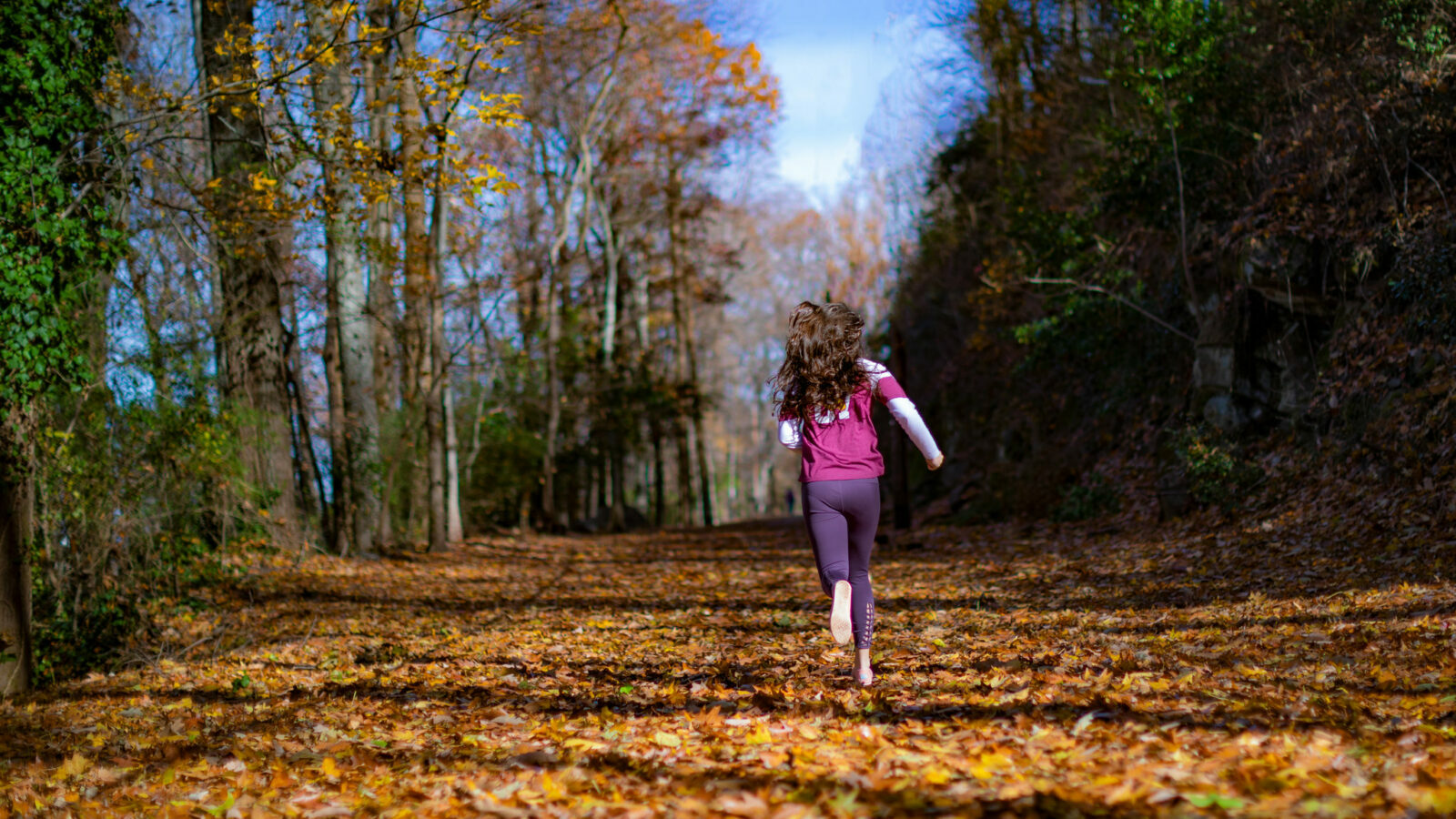 Visit your favorite trails and discover new ones. (Provided)
Get Involved
Whether you’re a longtime trail user or new to Birmingham’s growing greenway network, there are many ways to support and celebrate the Crossroads Trail project and the Red Rock Trail System:
- Get outside. Visit your favorite trails and discover new ones. Use Freshwater Land Trust’s interactive trail map to explore the Red Rock Trail System.
- Share your experiences. Post your photos on social media and tag @freshwaterlandtrust.
- Give back. Support Freshwater Land Trust’s work to conserve land and connect trails across Central Alabama.
As Birmingham’s trail network grows, so does our capacity to honor history, foster health, and build community. The Crossroads project demonstrates how investments in streets, trails, transit, and public spaces can strengthen connections between people, neighborhoods, and the stories that define Birmingham.


