
 2 months ago
17
2 months ago
17
When longtime Detroit Lions center Frank Ragnow retired last June with two years left on his contract, the franchise made the four-time Pro Bowler pay back part of his signing bonus, according to the Detroit Free Press’ Dave Birkett, who also reported Tuesday that the Lions previously forced Barry Sanders and Calvin Johnson to make similar repayments.
In an interview with the Free Press at the NFL’s annual meeting, Lions president Rod Wood didn’t reveal exactly how much Ragnow had to return, but Wood reportedly confirmed that the franchise pursued “a portion” of his signing bonus proration.
Following a slew of injuries, including a fractured throat, Ragnow walked away from the game at 29 years old. While he attempted a midseason comeback to help a Detroit offensive line that was struggling on the interior, he failed his physical that notably uncovered a Grade 3 hamstring strain.
“Our precedent goes all the way back to Barry Sanders,” Wood told the Free Press on March 29. “And if Barry Sanders paid back money. … And I think the reality is, they’re not paying back their money, they’re returning our money. Cause they were paid in advance for services that they hadn’t completed.”
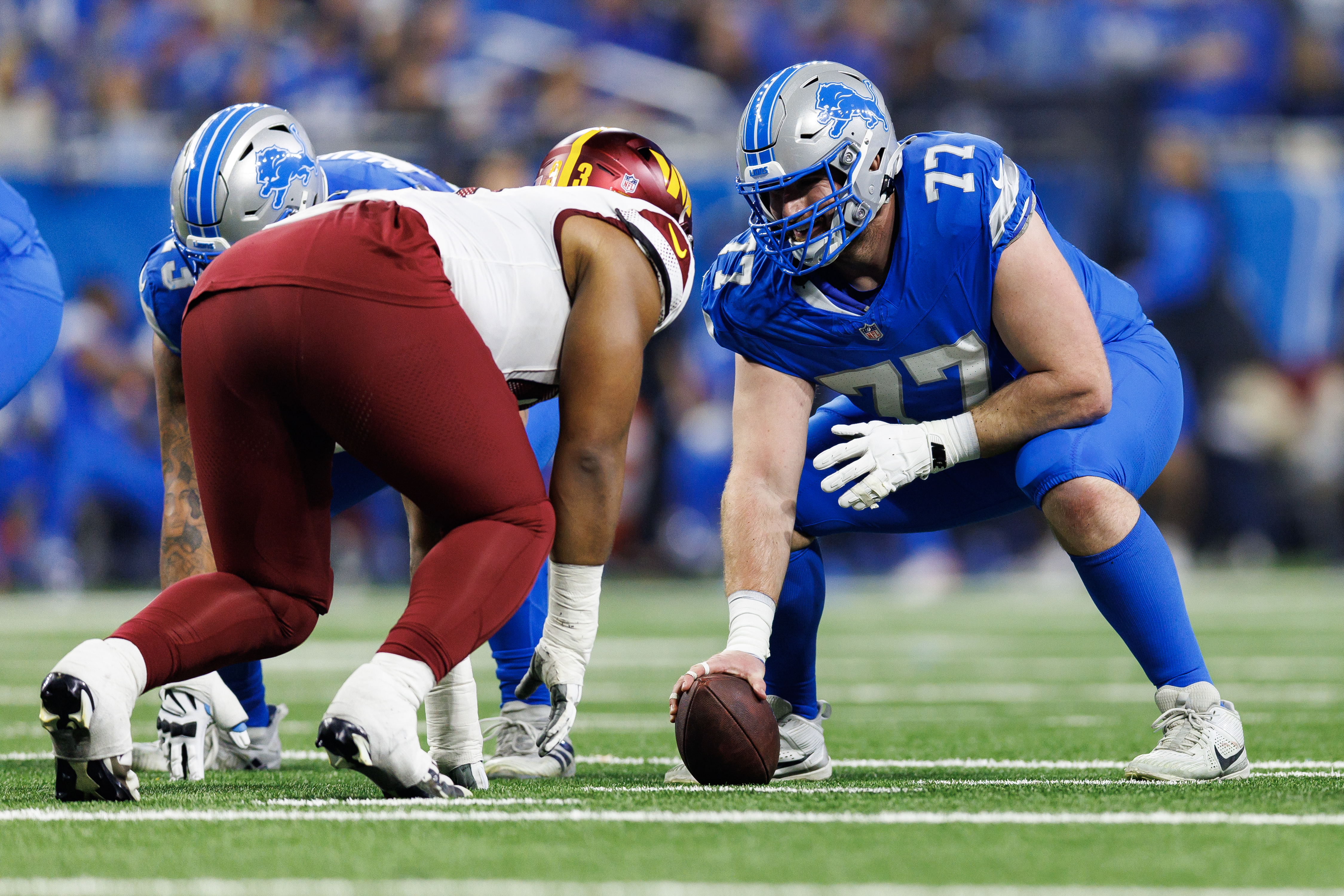 Frank Ragnow played seven seasons with the Detroit Lions, who selected him in the first round of the 2018 draft. (Photo by Brooke Sutton/Getty Images)
In the spring of 2021, Ragnow signed a four-year extension reportedly worth $54 million that made him the highest-paid center in the NFL at the time. The 2018 first-round pick out of Arkansas still had two years left on his rookie deal, so the extension kicked in during the 2023 season and was set to run through 2026.
That lucrative extension, per the Free Press, included a $6 million signing bonus, which counted $1.5 million against the cap each season from 2023-26.
Not every team seeks signing bonus prorations when players call it quits early, the Free Press reported Tuesday. And the Lions doing so after Ragnow fought through injury after injury to play for the organization during a formative seven seasons is eliciting some frustration.
Retired center Jason Kelce, who was a six-time first-team All-Pro and seven-time Pro Bowler with the Philadelphia Eagles, took to X to unpack his disagreement with the Lions’ handling of the situation.
“… The whole purpose of a signing bonus is to be a guarantee up front that insures a salary irregardless of performance metrics, or most importantly injuries that could compromise your career in the future,” Kelce wrote.
Kelce later added in that post: “So while I get that the team has a right to ask for money back, in the spirit of the agreement, I think it’s bulls*** Frank is being asked to return money. This was clearly a player that the game had physically taken its toll on, and his body was clearly no longer holding up to the rigors of the NFL. It wasn’t just some player deciding he didn’t want to play anymore, it wasn’t that simple, and these signing bonuses are there to protect players from the inevitable injuries they incur on the field.”
This is interesting. It feels like it’s obvious that Frank retired because he was physically fighting through injuries and pain, and it got to a point that he no longer could play the game in an enjoyable, effective, or healthy way.
The whole purpose of a signing bonus is to… https://t.co/pvjgvLrsA0
Like Kelce, Ragnow found his way onto multiple All-Pro teams. He was a second-teamer in 2020, 2023 and 2024.
His efforts, particularly during the Dan Campbell era, have been greatly appreciated by the city and players across the league, especially the teammates he shared a locker room with. One of them, former Lions linebacker Alex Anzalone, chimed in on X as well:
Played through fractured throat, one week post meniscus clean up w/ stitches barely out, inoperable/unrepairable toe, etc.. “Hey let me get that prorated signing bonus back” 😂😂😂
Do business as business is being done https://t.co/itr9jxhrqP
Infamously, after Sanders retired just before training camp in 1999, the Lions took the Pro Football Hall of Fame running back to arbitration to force him to give back part of his signing bonus, more than $7 million of it, according to the Free Press.
That had a negative effect on his relationship with the Lions, and Johnson, a Hall of Fame receiver, had a similar experience when the franchise reportedly made him repay $1.6 million of his signing bonus after he hung up his cleats in 2016.
In the years since, Sanders and Johnson have seemingly made up with the Lions, but the franchise’s contractual stubbornness is still ruffling feathers in the football world.